
Show summary Hide summary
Soup, that dish we either love or dread, holds many secrets to awaken our taste buds. Do you sometimes find yours a bit bland? Wait until you discover grandmother’s genius trick, which changes everything in two spoonfuls.
Grandmothers’ secret for a soup full of flavor
Honestly, we often think that soup is just a mix of vegetables in water, but it’s much more subtle. Our ancestors, however, knew that it’s not just cooking vegetables but enhancing their flavors. A soup without character is often poorly thought out.
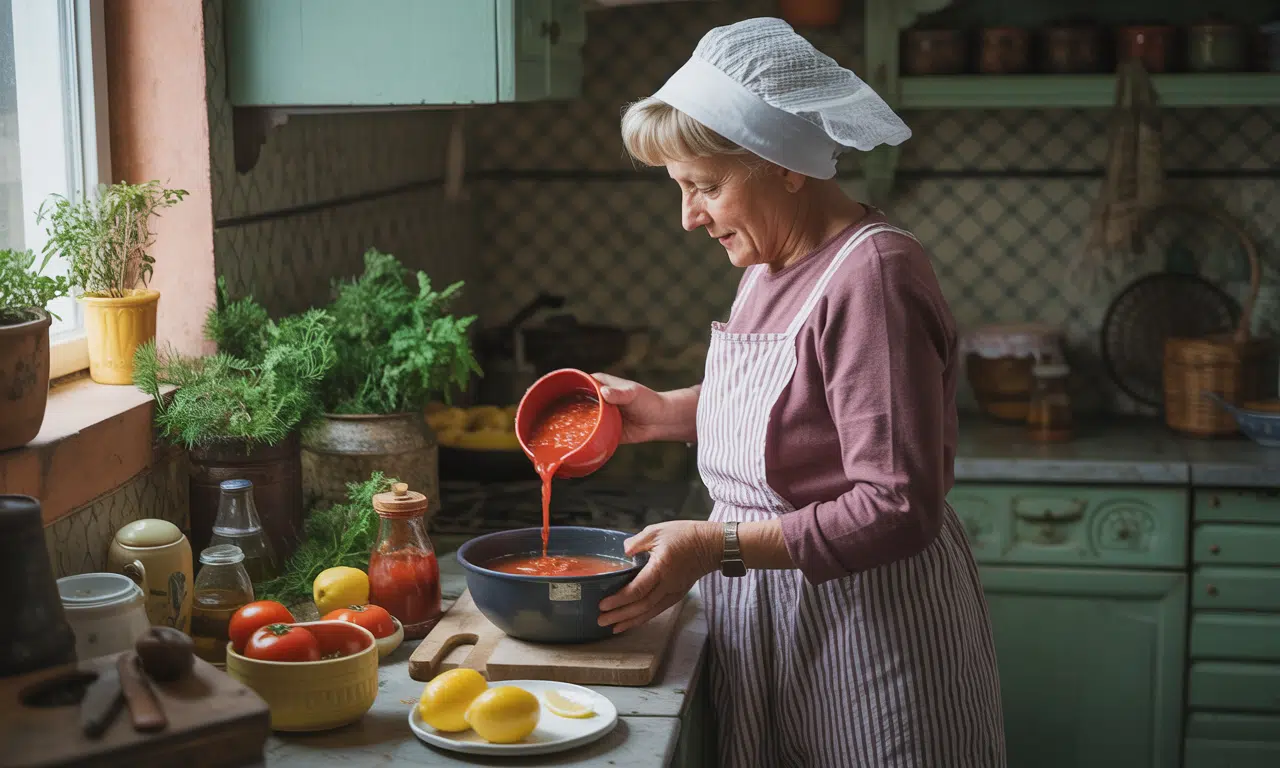
The solution? Add just the right amount of tomato paste and a splash of lemon. This simple trick balances sweet and tangy, giving an immediate boost without any gimmicks. It almost seems like they’re dancing together in the pot.
Gastroenterologist: the ideal number of vegetable servings to eat each week for your health
Discover the chefs’ secret technique for a velvety soup… without a drop of cream!
Why tomato paste and lemon make all the difference
Tomato paste brings a natural sweetness and a round flavor that adds body, while lemon wakes everything up with a hint of acidity. These notes balance each other, like a perfect duo in harmony on your tongue. It’s a technique that revives the soup without masking its ingredients.
It’s a bit like brightening up a dull painting with just two vivid colors. Honestly, this simple trick works just as well with potato soup as with coral lentil or pumpkin soup.
Creative alternatives to personalize your soup
And if you feel like playing chef, our grandmothers also had plenty of other ideas up their sleeves. For example, mixing cream, soy sauce, and chili oil creates an astonishing depth and incredible smoothness. A way to add softness and punch.
Another often forgotten trick: spices. Curry, cinnamon, or ras el hanout awaken soups as soon as you touch them. I remember a butternut soup garnished with a hint of cinnamon—it was incredible, almost magical.
Texture and crunch: the final touch for successful soups
Ah, texture! An often overlooked but oh-so-essential element. Our grandmothers knew this: a soup that snaps under the tooth is much more indulgent. Need crunch? Add garlic-rubbed croutons, toasted seeds, or even chopped almonds.
These little bits add a relief that makes each spoonful more interesting. It’s simple—once you’ve tasted a soup with this little extra, going back to a smooth texture seems… frankly monotonous.
Creativity on the plate
The idea is not to hold back. Mixing flavors and textures is the key to making a soup unforgettable. Sometimes, a bit of garlic powder, fresh or dried herbs, even fried onions can change everything.
You see, soup is a playground, not a chore. And honestly, if you surprise them with these tricks, they’ll end up asking for more. That’s my little promise (and I’m sure Grandma would have approved)!
How to avoid a soup being bland?
Make sure to season well with ingredients like tomato paste and lemon that balance the flavors. Also add spices adapted to the vegetables used.
What ingredients improve my soup’s texture?
Toasted seeds, garlic-rubbed croutons, and chopped nuts like almonds or peanuts add very pleasant crunch.
Can we vary spices according to the seasons?
Absolutely, in summer favor light spices like coriander or fennel, in winter opt for cinnamon, paprika or ras-el-hanout for more warmth.
Why not use bouillon cubes?
Succumb to nostalgia: discover the authentic recipe for apple fritters, prepared in the way of our ancestors for a comforting snack
Perfect Pot-au-feu: the art of cooking your vegetables in the right order for guaranteed success
Bouillon cubes can mask natural flavors, whereas focusing on ingredient quality and good seasonings offers an authentic and rich taste.
