
Show summary Hide summary
Traditional Basquaise Chicken Recipe: Flavors of the South-West
So, you’ll see, Basquaise chicken is one of those dishes that takes you straight to the Basque Country. I like it when it simmers slowly, first it fills the house with an amazing smell, then you have to be patient, that’s also the secret, I think.
I admit, the first time, I had a bit of trouble with the peppers. Too cooked, too crunchy, basically the kind of thing that makes you change your mind. But this time, I found the right timing and it changes everything. The Espelette pepper is honestly the star that spices without burning.
Couscous Royal: The traditional recipe for an exceptional Mediterranean culinary journey
Authentic Tartiflette: Discover the Traditional Failproof Recipe
If you’re like me, a bit absent-minded, you might forget to add one spice or two. Don’t worry, it happens, and this dish knows how to adapt. I like to tinker a bit, sometimes I add a little thyme, or not, randomly.
Ah, and the tomatoes! I often take fresh ones, but I confess that when I’m in a hurry, canned tomatoes also do the job – yes, I promise, it’s not embarrassing, we all do that sometimes. The secret is the blend of flavors more than the strictness of the recipe.
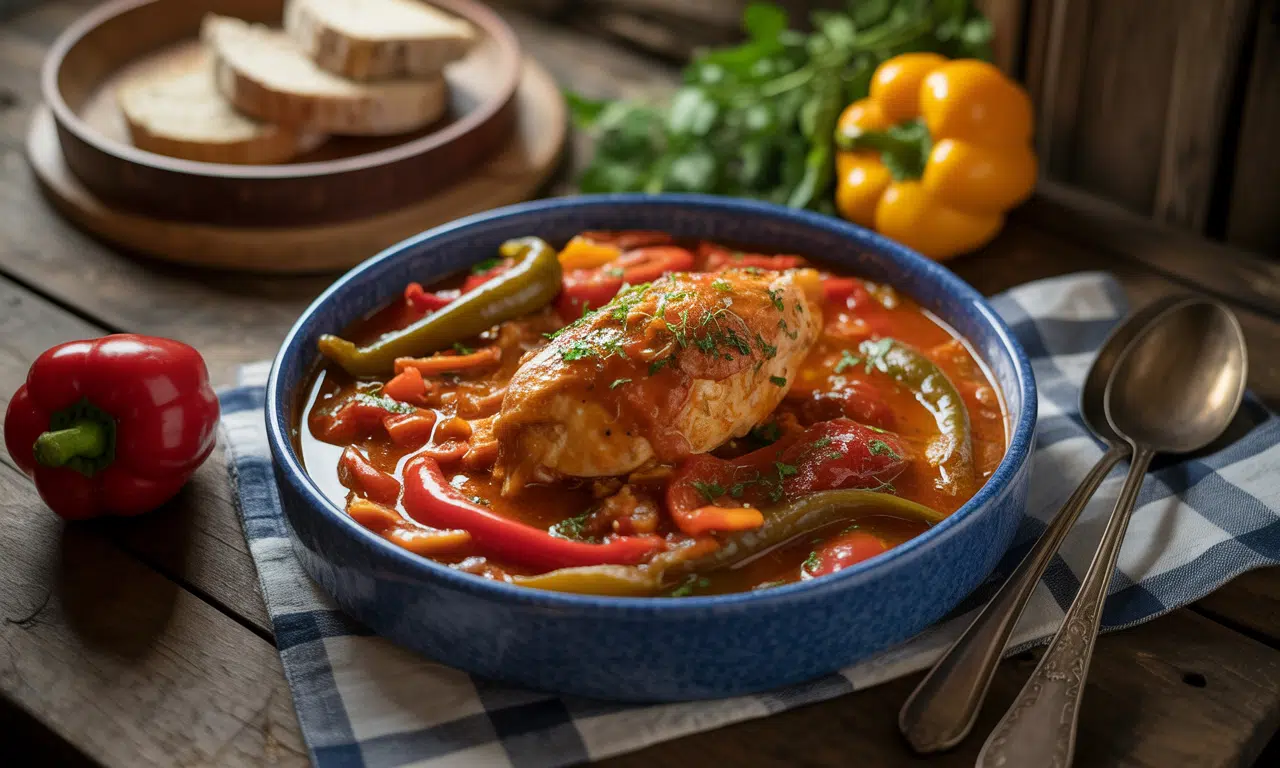
Essential Ingredients to Make an Authentic Basquaise Chicken
- 1.2 kg of chicken (thighs and drumsticks preferably, more flavorful and tender)
- 3 peppers (red, green, and yellow, to have vibrant colors)
- 4 ripe tomatoes (or a large can of peeled tomatoes)
- 2 onions
- 3 garlic cloves
- 10 cl dry white wine
- 1 tablespoon olive oil
- 1 teaspoon Espelette pepper (not too much, it’s spicy but not burning)
- Some sprigs of thyme and bay leaf
- Salt and pepper
Essential Utensils for Your Homemade Basquaise Chicken
- A cast iron casserole (keeps the heat like a dream)
- A sharp knife (you’ll be cutting quite a few vegetables)
- A cutting board
- A wooden spoon to stir without scratching your casserole
- A small bowl to prepare your spices and pressed garlic
How to Make a Truly Awesome Basquaise Chicken
Well, to start, take your chicken, season it with salt and pepper a bit. Then, straight into the casserole with the hot olive oil. The idea is to color the skin, not to fry the chicken, so go gently, keep an eye on it.
I like to put the pieces skin side down and wait until they brown nicely, it brings a texture I love, a little crispy. Meanwhile, you can tackle the peppers, same thing, cut them into strips. Not too big so they melt well.
Then, onions, garlic, throw everything into the casserole. This is the moment to sauté a bit, then add chopped tomatoes. I prefer a slow cooking, so I turn down the heat and put a lid on. It’s long but very good.
Ah, and the white wine! I pour it after browning everything, it deglazes the casserole. Make sure to scrape the bottom, that’s where all the flavor hides. After, add the herbs, the pepper, cover, and let simmer. If you’re like me, you’ll find it hard to wait.
Little Tips to Perfect Your Basque Dish
- Choose a farm chicken: it changes everything in taste and texture
- Don’t overcook the peppers, they should keep a little crunch
- Keep the lid on the casserole so the flavors blend well
- Adjust the Espelette pepper according to your tolerance for spiciness
- Serve with white rice, it’s classic but always works
The History of Basquaise Chicken and Its Roots in South-Western Cuisine
Basquaise chicken really comes from the Basque Country, this region where the sea meets the mountain. Its origins are simple, peasant, with ingredients easily found locally, like these famous sweet peppers or the pepper.
This dish has long been a family meal, served after a hard day’s work or a nice mountain walk. Today, it is one of the classics you can’t miss when you want to bring a little sunshine and history to the table.
What I also like is that there are several versions, depending on villages and families. So, well, you can do like I do at home or try other styles, the essential thing is to feel warmth and friendliness from the first bite.
- An iconic dish of the Basque Country
- Local and seasonal ingredients
- A delicious blend of land and sea
- A story that brings together families and friends
Can other types of meat be used for this recipe?
Traditionally, chicken is used, but some replace it with rabbit or even turkey according to tastes, it works just as well in the casserole.
What is the best way to store leftover Basquaise chicken?
You can keep leftovers in the fridge in an airtight container for 2 to 3 days. For reheating, prefer gentle cooking in a pan rather than the microwave to preserve the flavors.
What is the origin of Espelette pepper?
It comes from the village of Espelette, in the Basque Country, it is a mild and fragrant pepper that spices dishes without making them too hot. Essential in this recipe!

Basquaise Chicken – the recipe
4
servings15
minutes45
minutes500
kcalEnjoy a Basquaise chicken with authentic flavors of the Basque Country.
Ingrédients
1 kg cut chicken
2 tablespoons olive oil
1 large onion
2 red peppers
2 green peppers
2 cloves garlic
400 g canned peeled tomatoes
200 ml dry white wine
100 g Bayonne ham
Classic veal Blanquette: the authentic and traditional recipe to discover
Italian Delights: The Authentic Bolognese Lasagna Recipe
salt
pepper
Instructions
- Heat olive oil in a large pan and brown the chicken pieces for about 5 minutes on each side.
- Add the sliced onion and cook until translucent, about 5 minutes.
- Add the sliced peppers and minced garlic, cook for another 5 minutes until the peppers are tender.
- Pour in the white wine, then add the crushed peeled tomatoes. Mix well and bring to a boil.
- Add the Bayonne ham cut into strips, season with salt and pepper to taste.
- Cover and let simmer on low heat for 30 minutes, stirring occasionally.
- Serve hot with rice or steamed potatoes to fully enjoy the juice.
Video
Nutrition Facts
- Total number of serves: 4
- Calories: 500kcal
- Cholesterol: 150mg
- Sodium: 600mg
- Potassium: 800mg
- Sugar: 8g
- Protein: 40g
- Calcium: 60mg
- Iron: 5mg
- Thiamin: 0.2mg
- Riboflavin: 0.2mg
- Niacin: 12mg
- Folate: 30mg
- Biotin: 5mg
- Phosphorus: 300mg
- Iodine: 40mg
- Magnesium: 50mg
- Zinc: 3mg
- Selenium: 35mg
- Copper: 0.3mg
- Manganese: 0.5mg
- Chromium: 10mg
- Molybdenum: 20mg
- Chloride: 1500mg

